Visual Learning machine
Elevator: why a small motor lifts a heavy car
By @elvar_official, part of Visual Learning. Counterweight and emergency brake: the motor only carries the difference.
Made with ClaudeEnglishFreeNo account
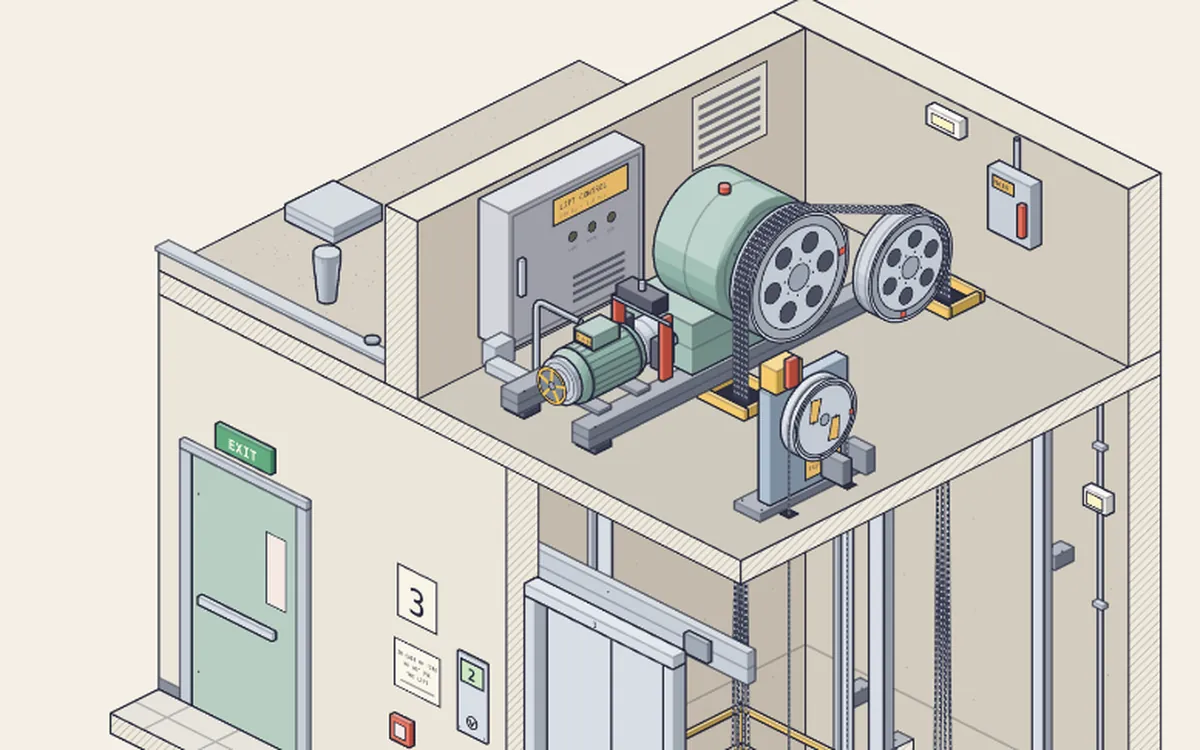 Open on its site
The question it answers
Why can a small motor lift a heavy car, and what stops it if the cables snap?
The steps
- 1Call it
- 2The doors open
- 3Load 320 kg
- 4Go up to floor 3
- 5Unload
- 6Cut the cables
The big idea: The counterweight weighs the same as the car plus 45% of a full load, so the motor only holds the difference: 40 kg instead of 1,320. And if the cables snap, the overspeed governor trips and wedges brake against the rails, the trick Elisha Otis showed in 1854.
The question, steps and idea are translated from the original site.
What it is
An elevator opened from top to bottom: the machine room, the motor, the cables, the counterweight and the brake that stops the car if the cables snap. It shows that the load a motor sees depends on the mechanism, not just the weight.
- Visual Learning machine 14
- Step-by-step and Auto mode
Use it on the roadmap
- Stage 3. Motors, drivers and sensors
Why the load a motor sees depends on the mechanism, not just the weight.
On the same topic

PlayStation controller: a trigger that pushes back
A small motor, a worm gear and gears that push against your finger
@elvar_officialMade with Claude
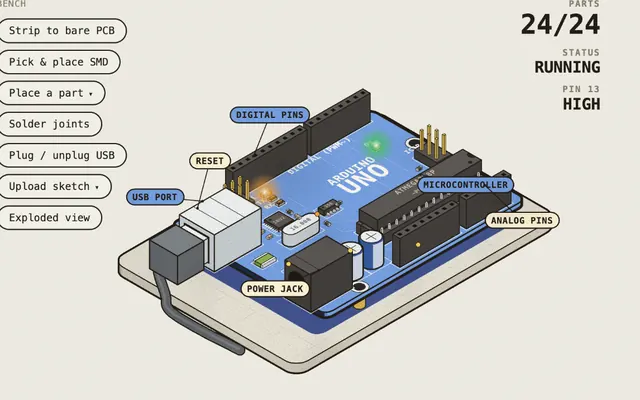
Robotics Bench
13 real boards you assemble like in a factory, power up and break
@0xMovezMade with Claude
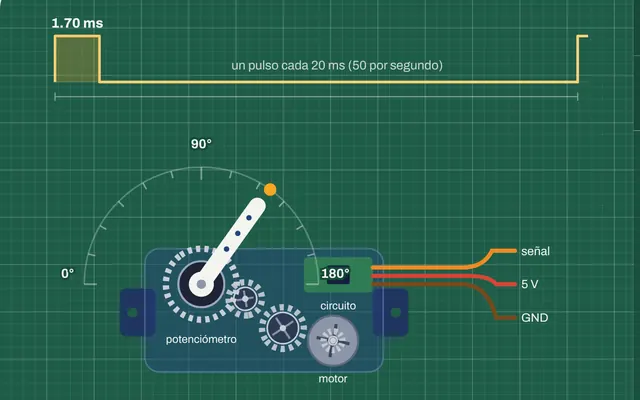
SG90 servo: from PWM to angle
How a servo knows which angle to move to, in 3D and from the inside
RobotVisualMade with ClaudeIn Spanish